“The French get a ton of vacation”

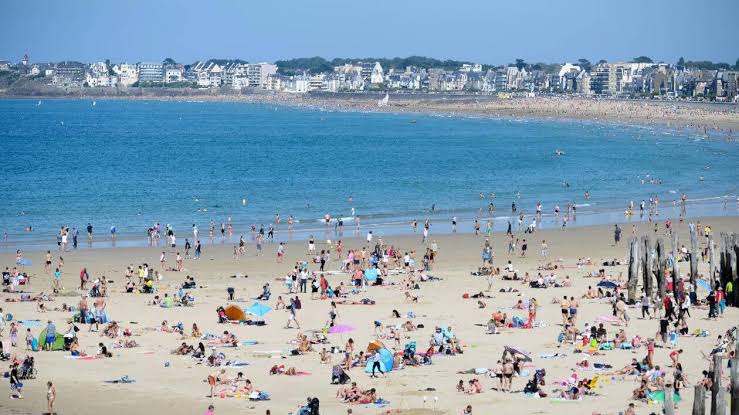
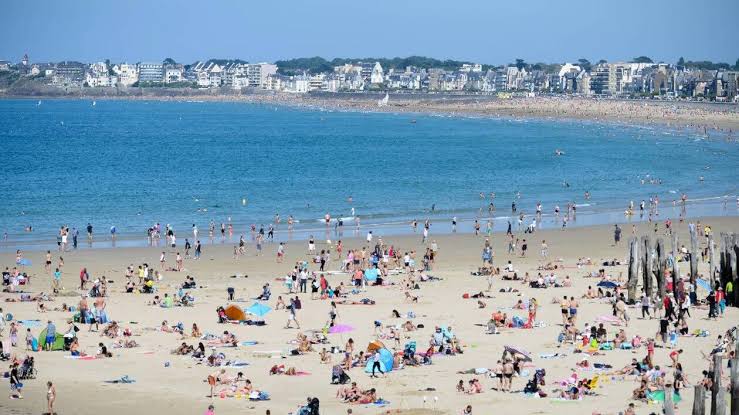
…is a sentence you can hear anywhere in the world, colored by a whole spectrum of emotions: outraged, from the right-wing politician worried about the country’s competitiveness. Contemptuous, from more work-obsessed cultures. Jealous, in countries where paid leave is a lot shorter – or nonexistent.
But if you’re not French and you live in France, and especially if you work there, you’ve probably wondered at least once (pick whichever answer fits you best):
- Wait, why are all the stores closed today?
- Why are train tickets so expensive this week?
- When’s the next time I can grab a three-day weekend to escape this hellish heatwave — and these insufferable Parisians while I’m at it?
So, vacations in France: when are they? Who are they for? What are we celebrating, and how many are there? Here’s the rundown:
There are three types of time off to keep straight in France:
- School vacations, which only apply to kids in school (and, partly, to school staff)
- Work vacation days, which every employee gets, and which are often taken during school vacation periods because, shockingly, people in France still tend to have kids (if anyone wants to write a blog post about why, I’m all ears)
- Public holidays, set by law, which stack on top of these vacation periods — to the point that I personally heard some French people complain (how original) that they should get made up when they land on a Sunday (there are two things you can’t take away from a French person: Alsace-Lorraine, and their grasse matinée or sleeping in).
Work vacation days:
Under French labor law, for one year of work, an employee is entitled to 30 working days off, or 5 weeks of vacation a year. What’s good to know if you work in France: a “working day” is a day that would normally be a workday for the employee, so it excludes Sundays or legally mandated public holidays. Generally, it’s the employer who decides the dates on which the employee can take time off, with the employee’s agreement most of the time nowadays (except if the business doesn’t allow much flexibility). The law requires that at least 12 consecutive vacation days be granted between May 1st and October 31st, so the employee gets 2 weeks of “summer vacation”. Another 12 days can be scheduled at times the company wants during the year, with the employee’s agreement. The 5th week can be split up and spread out more freely. Thus, even though how the days get split up can vary depending on company policy and negotiations with your employer, if you work in France, don’t expect to take your 5 weeks whenever you feel like it. However, you will and should set off on la route des vacances to crash on a sunny beach as soon as the heatwave starts blazing the cities if you want to feel authentically French, and experience the endless highway embouteillages (traffic jam) on the way to them.
I’ll see you next time for the second part of the article. Meanwhile, enjoy your holidays 😊
School vacations:
In France, school isn’t as loosey-goosey as it is in some other countries: our modest tax dollars guarantee everyone a mandatory, equal, and quality education, meticulously organized by the Ministry of National Education (Mr. Macron, if you’re reading this, I said exactly what you told me to say). It’s the Ministry that sets the school vacation periods — but it does so based on a historical calendar, heavily shaped by religious holidays. Here’s how it breaks down:
- First up, Christmas break, which usually runs from late December to early January, with some variation depending on the region and the year, during which we celebrate:
- December 25th, which everyone calls Noël. It’s the day that saw the birth of Jesus Christ, the god of Christians, and of Santa Claus, the god of shopping malls.
- January 1st, called le jour de l’an, le premier de l’an or even le nouvel an, which doesn’t really have any Christian religious meaning: we celebrate renewal, the end of a cosmic cycle, and signing up for a gym membership to lose the Christmas pounds.
- L’épiphanie, or “Three Kings’ Day,” which traditionally celebrates the visit of the three wise men to baby Jesus, shortly after his birth (but also, and mainly, Jesus’s baptism by John the Baptist 30 years later, and the beginning of his “manifestation” to mankind as God). It usually lasts 2 weeks.
- Winter break, which usually runs from the first to the second week of February: originally, it lined up with Mardi Gras and the start of Lent, before turning into ski season in the Alps, hugely popular with the well-off, back when there was still snow. It usually spans 2 weeks, starting on a different date depending on which of the 3 vacation zones in France you’re in.
- Spring break (les vacances de Pâques, or Easter break), of which date shifts depending on when Easter falls – that is, on the whims of the Moon. It usually lasts two weeks. This is when we celebrate Easter, the most important holiday in Christianity: the days of Jesus Christ’s crucifixion, who died to redeem humanity’s sins, and his resurrection.
- Summer break, commonly called les grandes vacances (the big vacation) in French, which gradually became a thing for everyone, as school became mandatory. It usually lasts two months, from early July to early September. We’re often told in school that it was set up so kids in the countryside could help their parents during harvest season, but it seems the summer heat wasn’t great for working OR for studying, and that lazing around at home or at the family’s second home was, for once, something every social class had in common.
- Finally, “Toussaint” break (All Saints’), about ten days, which always falls around November 1st and 2nd, days when we used to celebrate, back to back, all the saints (model figures from Catholic history) and then the dead. The French, inspired by American culture, are increasingly celebrating Halloween on October 31st as well. Expect cute little rascals to knock on your door and ask for French cheese-flavored candies on that day.
The French get a ton of vacations, part 2
In my previous article, I made a summary of how the holidays and vacations system work in France. This is the second part about public holidays that I didn’t include.
So what are public holidays in France, and what to expect?
On top of these vacations, French law requires that certain days be taken off work by both employees and schoolkids throughout the year. Barring exceptions, you can treat yourself to letting your body purify itself with sleep after that 5th glass of bad Pinot Noir that Maurice, the owner of the corner bar “Paris-Bière”, poured you the night before while ranting about politics – and sleep in a little longer than usual (no, I’m not projecting my own habits onto anyone else). But wait, which days are we talking about? There are 11. Same as the US. See, we’re not that lazy! We’ve already mentioned December 25th, January 1st, Easter, and Toussaint. So here’s what’s left, in order:
May 1st: Labor Day, which you probably know comes from that wonderfully socialist, pro-union country… the United States.
May 8th: the day Nazi Germany surrendered, ending World War II. A relief for a lot of people.
Often around the same time, Ascension Thursday, which celebrates Jesus’s final appearance to his disciples after his resurrection, and his ascension into heaven. 40 days after Easter.
It’s followed by Pentecost Monday, which celebrates a miracle said to have touched Jesus’s disciples after his death, considered the founding event of the Christian Church. 50 days after Easter.
Both of these dates move around, just like Easter.
July 14th, or Le quatorze Juillet ou la fête nationale (nobody calls it « Bastille day » in France). This celebrates July 14, 1789, a symbolic date from the Revolution, and more broadly, the founding of the French Republic and its values.
August 15th: l’Assomption, another Catholic holiday celebrating the death and ascension into heaven of Mary, mother of Jesus Christ. Mary has been considered France’s protector since the Middle Ages, and — interesting bit of trivia — the Feast of the Assumption was apparently given a boost by King Louis XIII, after he prayed to the Virgin Mary for a son he was desperate to ever have: the future Louis XIV, the famous Sun King.
November 11th, which celebrates the end of World War I (a war that left a huge mark on the French collective memory: every town, since then, has a war memorial you can spot in the main square, listing the names of soldiers killed in combat).
Important things to know about these public holidays:
Just like Sundays in France, hardly anyone works on these days. So don’t expect to go shopping or open a bank account. Some essential businesses sometimes stay open, in the morning — small convenience stores, a few bakeries, some restaurants, highway gas stations — usually if they figure it’s financially worth it to pay their staff extra. Note that some holidays are more “off” than others: most museums, restaurants, or leisure spots like movie theaters will stay open on certain holidays, like May 8th, November 11th, Pentecost Monday, or Ascension Thursday. That said, on December 25th, January 1st, Easter Sunday, May 1st, and July 14th, expect everything to be “closed closed” — nothing open except the kebab shop and the gas station (the two go-to businesses for insomniacs) — so stock up on baguettes, cigarettes, and Doliprane pain killers the night before, like the good French person you are!
Last, if you ever hear the expression faire le pont in France, be filled with joy: it usually happens when a public holiday falls near a weekend (let’s say, a Thursday): your company or uni may allow you to take an extra day off on the day in between the public holiday and the weekend, to have a five-day break, which you’ll catch up somehow later. It’s a common practice in France.
I hope this article was full of handy information, and I wish you happy holidays to all!



Responses