Learn French through their Presidents 2 : From Pompidou to Mitterrand

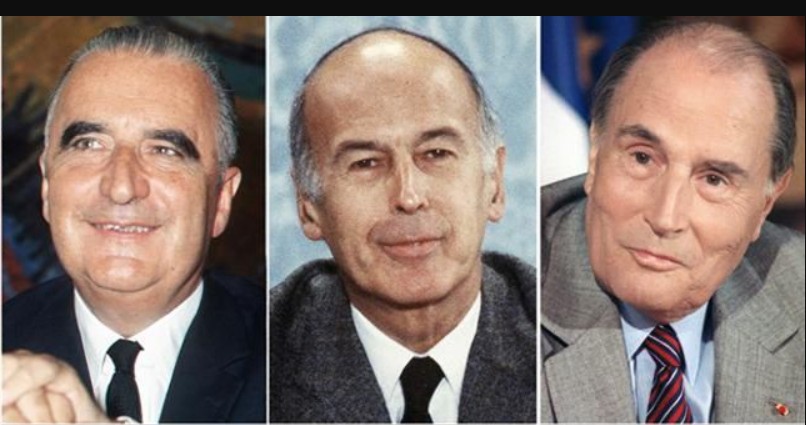
Pompidou – The « liberal » (le libéral) – from 1969 to 1974
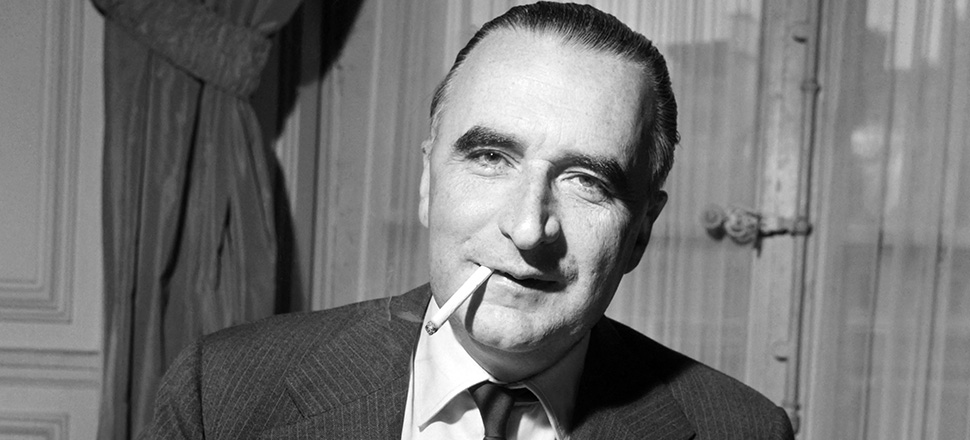
In 1969, when De Gaulle decides to withdraw from politics, Pompidou his long-term prime minister, has already expressed his desire to take over, causing a squabble between the two men. His popularity as a prime minister, and his more tempered and compromising personality, have him elected. During his short years in office, Pompidou will undertake to continue to modernize and industrialize France: he’s credited for launching the TGV, France’s iconic train, gathering partners to create Airbus, and give France a vast network of roads and highways, car being a symbol of freedom. In order to give Paris a more modern look, he inspires the creation of the “Centre Georges Pompidou”, thought as complementing the Louvre, and to give Paris a space dedicated to literature and contemporary arts. He’s mostly perceived positively by French people nowadays, as those who remember still admire his easy-goingness, his will to govern for the general interest, above the social classes, and the discretion and perseverance he showed in continuing to operate as a president despite the fatal blood cancer he contracted while in office.
A quote or two to remember:
« Mais arrêtez donc d’emmerder les Français ! »: Stop bothering the French, will you? – A sentence he pronounced as a prime minister to a young Jacques Chirac, to protest about legal inflation, still quoted by Macron recently, which emphasizes his “laissez-faire” liberal style.
« L’intérêt général a cette particularité qu’il ne s’impose pas naturellement. » : General interest has this particularity : it does not impose itself naturally – highlighting the former president’s will to govern above the parties and social classes, while still believing in other “natural” laws of free market.
Valéry Giscard d’Estaing – The « technocrat »
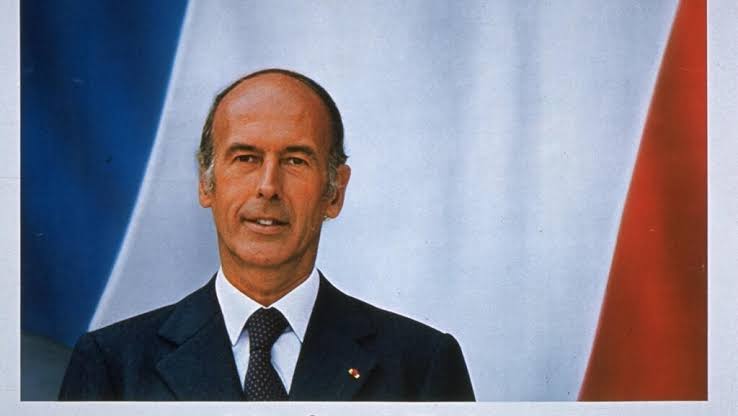
In 1974, following the decease of Georges Pompidou, Valery Giscard d’Estaing is voted in the office. He appears young and competent: exemplary product of the French “meritocracy”, he studied in Polytechnique and l’ENA (National School of Administration), before becoming a finance inspector, giving him an aura of high-level technical competency. Unlike his predecessors, he’s a convinced Europe-supporter, and will commit France into a more integrated Union with his partners. Today, he’s mostly remembered for modernizing family, supporting his minister Simone Veil in facilitating divorce and legalizing abortion. He’s also the first president of this era to face a major economic recession, after 1973’s oil crisis, which he handled with competence and humanity, continuing some important social reforms: revenue continuation by the social insurance in case of dismissal, among other advantages for the workers.
Nowadays, although he is still seen positively, he doesn’t rank among the most popular president. His aristocratic origins, doubled with his “technical” vibe, translated into a distant, sometimes haughty communication, according to the French public.
Memorable quotes:
« Vous n’avez pas le monopole du coeur. » – You don’t have the monopoly of the heart – A sentence he stroke François Mitterrand with during their 1974 debate, which is said to have won him the election.
« Au ciel, le policier est anglais, le cuisinier est français, l’amant est italien, le mécanicien est allemand et l’administrateur est Suisse. En enfer, le policier est allemand, le cuisinier est anglais, l’amant est Suisse, le mécanicien est français et l’administrateur est italien. » – In heaven, the policeman is English, the cook is French, the lover is Italian, the mechanic is German and the administrator is Switz. In hell, the policemen is German, the cook is English, the lover is Switz, the mechanic is French and the administrator is Italian. – a quote that reflects the former president’s commitment for a more integrated European Union, and his taste for technical management and sharp organization.
François Mitterrand – The “Sphinx”
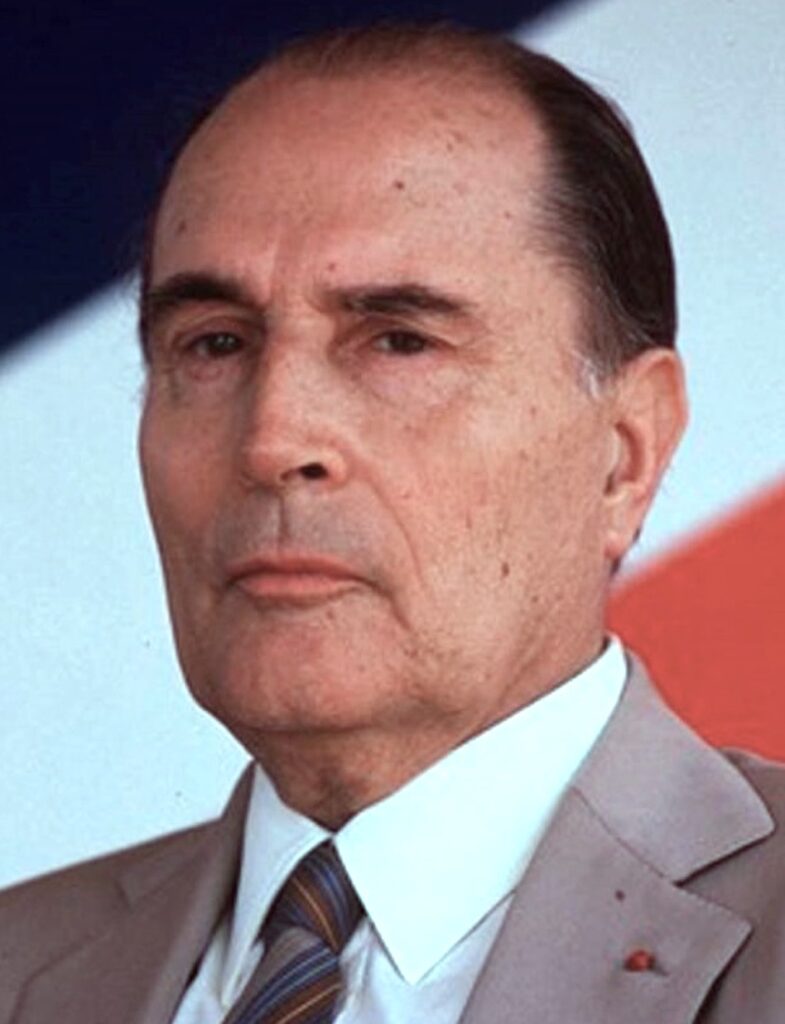
Let’s now have a zoom onto François Mitterrand, when things started to go shadier.
Elected in 1981 after decades as the great opponent of Gaullist power, François Mitterrand was the first socialist president of the Fifth Republic. He came to office with an ambitious left-wing, Keynesian-inspired program: nationalizations, a rise in social spending, the retirement age lowered to sixty, and the symbolic abolition of the death penalty. Yet the economic crisis and monetary constraints soon forced him into the famous tournant de la rigueur of 1983, a decisive shift toward budgetary discipline and a more liberal economic line. Mitterrand also left a deep European mark: he helped anchor France in a stronger and more supranational Europe, notably through the Maastricht Treaty, which remains one of the great turning points of European integration in its current form, thinking that it would help solve the economic crisis. In style, he cultivated distance, ambiguity and majesty better than anyone: slow speech, historical references, secretive methods, and a taste for symbolism.
In the French collective imagination, Mitterrand remains a paradoxical figure. For many on the left, he is still the man who finally brought the left to power under the Fifth Republic and gave it its great reforms; for others, he is also the man who abandoned part of its economic doctrine once in office. He is remembered as cultured, literary, strategic, manipulative, and extraordinarily patient: hence the enduring image of the “Sphinx”, mysterious and sometimes, nefarious. Polls still place him very high in retrospective rankings of Fifth Republic presidents, often just behind de Gaulle. But admiration is mixed with darker memories: his taste for secrecy, the numerous scandals he and some members of his political lieutenants were tarnished with, and his renouncement of his left-wing political ideals, also contribute to his image of a fallen icon.
A few quotes you may want to take away:
« La France est notre patrie, l’Europe est notre avenir » – France is our homeland, Europe is our future. A quote that illustrates François Mitterrand’s faith in the European Union project, which he pushed forward significantly.
« Gouverner, ce n’est pas plaire. » – Governing is not pleasing. It is true that while Mitterrand is said to have betrayed his left-oriented ideas, he did so because the reality of economic data showed him it wasn’t working.
« Vous ne voulez pas parler du passé… Vous avez tendance à reprendre le refrain d’il y a 7 ans, l’homme du passé. C’est quand même ennuyeux que dans l’intervalle, vous soyez devenu, vous, l’homme du passif » – You don’t want to talk about the past […] You tend to reuse this tune from 7 years ago, the man of the past. It’s embarrassing that, in the meantime, you have become the man of the passive. A striking, sarcastic sentence he came up with during his debate with Giscard-d’Estaing, that’s reputed to have helped him win the election in 1981.



Responses